The 1947 India and Pakistan map marks a pivotal moment in global history, forever reshaping South Asia. For audiences in the United States, understanding this historical cartography offers crucial insights into post-colonial nation-building and ongoing geopolitical dynamics. This map highlights the dramatic partition of British India, creating two independent nations: India and Pakistan. It showcases the hastily drawn Radcliffe Line, which delineated new borders and led to immense demographic shifts. Exploring the 1947 India and Pakistan map helps us grasp the profound human cost and the complex legacy of this partition. It remains a key navigational and informational topic, reflecting continuous interest in its historical significance and its long-term impact on the region. The divisions drawn on the 1947 India and Pakistan map still influence current events and international relations, making it a trending subject for historical and political analysis.
What major historical event led to the 1947 India and Pakistan map?
The 1947 India and Pakistan map emerged from the partition of British India, marking the end of British colonial rule. This pivotal event created two independent nations, India and Pakistan, based on religious demographics. It was a complex and often violent process, fundamentally reshaping the political and geographical landscape of South Asia and impacting millions of people.
How did the Radcliffe Line shape the 1947 India and Pakistan map?
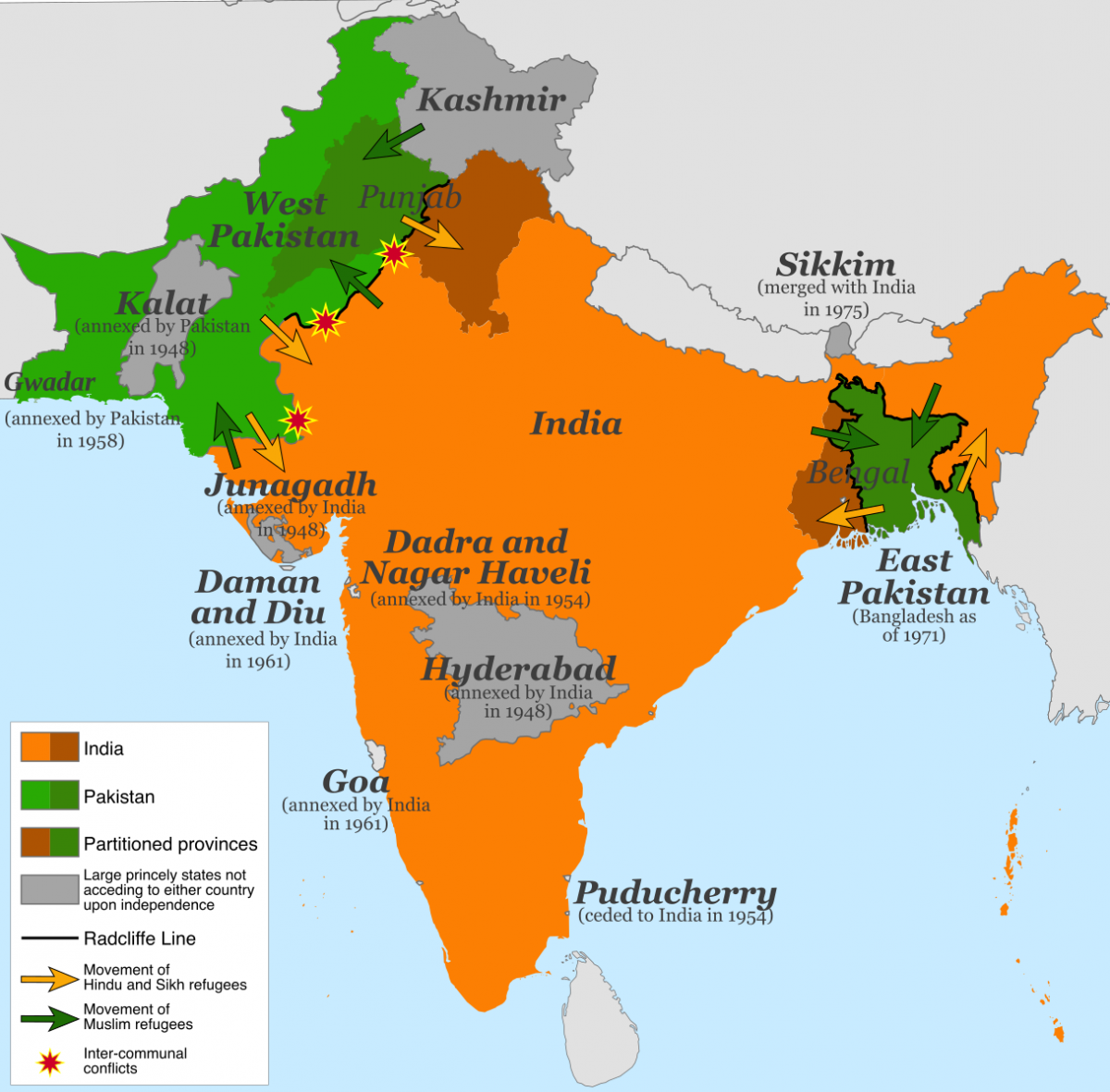
The Radcliffe Line, drawn by Sir Cyril Radcliffe, was the arbitrary boundary that defined the 1947 India and Pakistan map. This line partitioned the provinces of Punjab and Bengal, separating Muslim-majority areas for Pakistan from Hindu-majority India. Its hurried and often uninformed creation led to widespread communal violence and mass displacement, leaving a lasting legacy of unresolved territorial disputes.
What role did religion play in forming the 1947 India and Pakistan map?
Religion played a central role in the formation of the 1947 India and Pakistan map. The partition was largely driven by the 'Two-Nation Theory,' advocating for separate homelands for Muslims and Hindus. Pakistan was created as a Muslim-majority nation, while India remained secular. This religious division deeply influenced the border demarcations and the subsequent migrations across the newly formed countries.
What were the immediate consequences of the 1947 India and Pakistan map?
The immediate consequences of the 1947 India and Pakistan map were devastating. It triggered one of history's largest forced migrations, with millions crossing newly drawn borders. Widespread communal violence, loss of life, and immense suffering accompanied this demographic upheaval. The partition also laid the groundwork for future conflicts, including the enduring dispute over Kashmir, which remains a key legacy.
How did the 1947 India and Pakistan map differ from present-day maps?
The 1947 India and Pakistan map differs significantly from present-day maps, most notably with the existence of East Pakistan. East Pakistan later gained independence as Bangladesh in 1971. While core borders remain, geopolitical changes, regional conflicts, and evolving administrative divisions have altered the detailed mapping. Understanding the 1947 map provides crucial context for current South Asian geography.
When we look at the 1947 India and Pakistan map, we are exploring a monumental shift in global geography. This map shows the partition of British India, which created the independent nations of India and Pakistan in August 1947. Sir Cyril Radcliffe was tasked with drawing these new, complex borders. The division aimed to separate Muslim-majority regions into Pakistan from Hindu-majority areas, which remained part of India. This historical event sparked one of the largest mass migrations ever seen, impacting millions of lives and shaping modern South Asia. Understanding the 1947 India and Pakistan map is essential for grasping regional politics today.
Understanding the 1947 India and Pakistan Map: A Historical Overview
The 1947 India and Pakistan map visually represents the end of British colonial rule and the birth of two new sovereign states. This map illustrates a hurried and complex geopolitical reorganization. The borders, particularly the Radcliffe Line, separated communities and led to widespread displacement. Many people found themselves on the 'wrong' side of these newly defined lines, causing chaos and violence. The 1947 India and Pakistan map clearly shows the geographical challenges faced by the newly independent nations.
The creation of East and West Pakistan on the 1947 India and Pakistan map introduced unique challenges. These two wings of Pakistan were geographically separated by over a thousand miles of Indian territory. This separation eventually led to further conflict and the birth of Bangladesh in 1971. The 1947 India and Pakistan map therefore lays the groundwork for understanding decades of regional instability. It remains a powerful symbol of colonial legacies and their lasting effects.
| Feature | Description for 1947 India and Pakistan Map |
|---|---|
| Date | August 14-15, 1947 |
| Key Event | Partition of British India |
| New Nations Formed | Dominion of India, Dominion of Pakistan |
| Border Commissioner | Sir Cyril Radcliffe |
| Major Border | Radcliffe Line |
| Impact | Massive population displacement, communal violence |
| Territories Divided | Punjab, Bengal |
| Princely States | Given choice to accede to India or Pakistan, or remain independent |
What Others Are Asking? about the 1947 India and Pakistan Map
What was the Radcliffe Line on the 1947 India and Pakistan map?
The Radcliffe Line was the boundary demarcation line between India and Pakistan, published on August 17, 1947. Sir Cyril Radcliffe, a British lawyer, was responsible for drawing this line. It arbitrarily divided the provinces of Punjab and Bengal, creating two parts for Pakistan and leaving the rest for India. This line, drawn with limited local knowledge, caused immense suffering and enduring disputes over the 1947 India and Pakistan map.
Why was the India and Pakistan map divided in 1947?
The India and Pakistan map was divided in 1947 primarily due to political pressures and rising communal tensions between Hindu and Muslim populations. British colonial authorities, alongside key Indian leaders, decided partition was the most viable path to independence. The aim was to create a separate homeland for Muslims (Pakistan) while India remained a secular state. This decision profoundly altered the 1947 India and Pakistan map.
What were the two parts of Pakistan on the 1947 India and Pakistan map?
On the 1947 India and Pakistan map, Pakistan was formed in two distinct geographical parts: West Pakistan and East Pakistan. West Pakistan comprised areas like Punjab, Sindh, Balochistan, and the North-West Frontier Province. East Pakistan was formed from eastern Bengal. These two parts were separated by over 1,000 miles of Indian territory, leading to logistical and cultural challenges for the new nation on the 1947 India and Pakistan map.
How many princely states were there before the 1947 India and Pakistan map?
Before the 1947 India and Pakistan map was finalized, British India comprised numerous princely states, numbering around 565. These states were nominally independent but under British paramountcy. With the partition, they were given the option to accede to either India or Pakistan, or theoretically remain independent. Most states eventually joined India or Pakistan, a complex process reflected on the evolving 1947 India and Pakistan map.
Who created the map for India and Pakistan in 1947?
Sir Cyril Radcliffe, a British barrister, chaired the two boundary commissions responsible for demarcating the borders for India and Pakistan in 1947. He was brought to India specifically for this task, given only five weeks to complete the job. His decisions, which shaped the initial 1947 India and Pakistan map, were controversial and led to long-standing grievances due to the rushed and complex nature of the division.
FAQ about the 1947 India and Pakistan Map
What was the India and Pakistan map at 1947?
The 1947 India and Pakistan map depicted the newly drawn borders after the partition of British India. It showed the independent nations of India and Pakistan, including East and West Pakistan, following the end of colonial rule.
Why did the India and Pakistan map change in 1947?
The India and Pakistan map changed in 1947 due to the partition of British India, driven by the British government's decision to grant independence and the demand for a separate Muslim homeland (Pakistan).
Who drew the India and Pakistan map at 1947?
Sir Cyril Radcliffe, a British lawyer, was responsible for drawing the boundary lines on the India and Pakistan map at 1947. He headed the boundary commissions for Punjab and Bengal.
How did the 1947 India and Pakistan map impact lives?
The 1947 India and Pakistan map significantly impacted millions through mass displacement, communal violence, and the creation of enduring national identities and geopolitical disputes that persist today.
Where was the original India and Pakistan map boundary?
The original India and Pakistan map boundary, known as the Radcliffe Line, primarily divided the provinces of Punjab and Bengal in British India, separating Muslim-majority areas from Hindu-majority regions to form Pakistan.
Partition of British India; Creation of India and Pakistan; Radcliffe Line delineation; Mass migration and humanitarian crisis; End of British colonial rule; Kashmir dispute origins; East and West Pakistan formation; Enduring geopolitical impact.
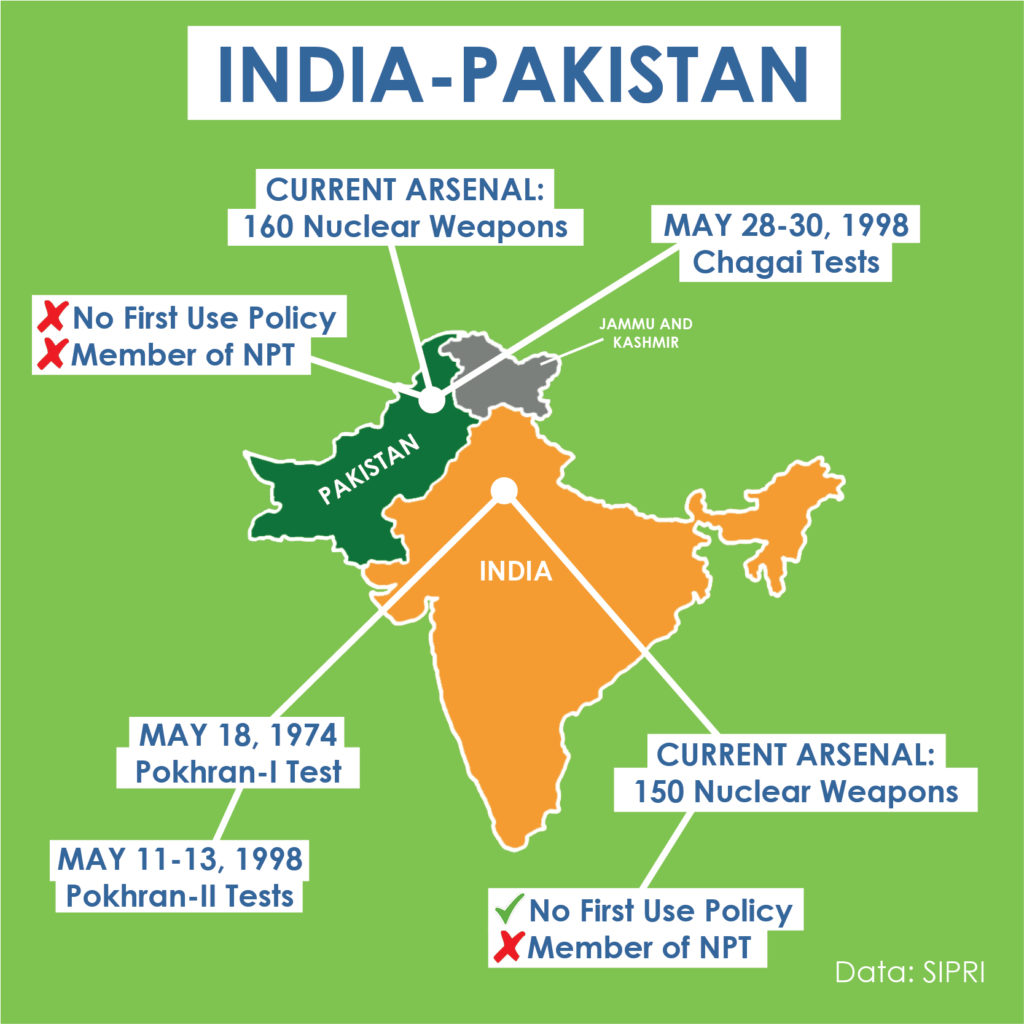 India And Pakistan Map At India Pakistan Overview x
 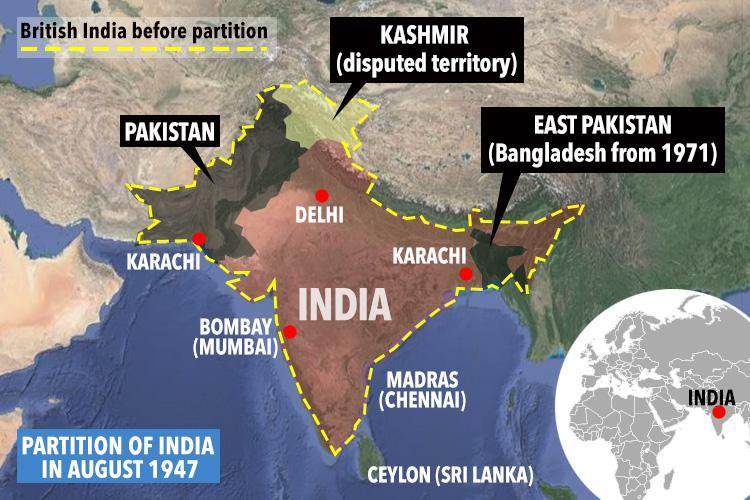 India And Pakistan Map At Es India Composite Map
 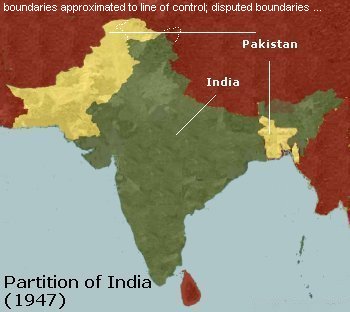 The Partition Of India Partition
 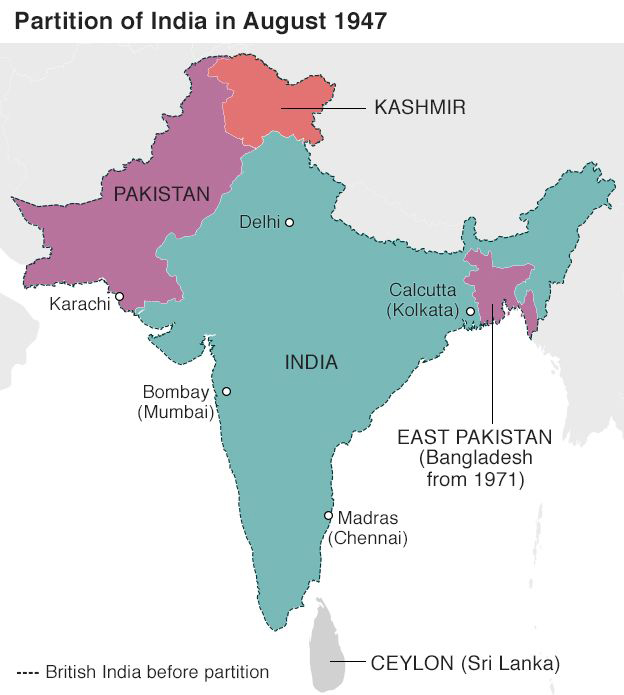 India And Pakistan India Map
  India Pakistan Partition Origins . India Pakistan
  India And Pakistan Map At India East Pakistan
  Hindustan Map Before Partition How India S Map Has Evolved Since
  A Rand McNally Map Of India And Pakistan Maps On The Web Tumblr R
  What Is Happening Between India And Pakistan World News Sky News Skynews Kashmir Pakistan India
  BBC NEWS Special Reports After Partition India Map
  Statewide Dual Credit Modern World History World In Crisis Conflict