Have you ever found yourself wondering about Liberia on the world map? This captivating West African nation holds a remarkably unique story, unlike any other on the continent. Established in 1847 by freed enslaved people from the United States, Liberia represents a powerful testament to self-determination and the enduring human spirit. This article navigates the fascinating journey of how Liberia carved out its place, not just geographically, but also historically and culturally, on the global stage. We will explore its precise location, delving into its rich history, understanding its vibrant culture, and recognizing its contributions and ongoing challenges within the international community. From its role as Africas first independent republic to its complex modern-day realities, understanding Liberias position on the world map means grasping a narrative of resilience, hope, and an unwavering quest for identity. Why does this nation, though relatively small, hold such profound significance? Well uncover what makes Liberia truly stand out, examining its geographical markers, the historical decisions that shaped its destiny, and the diverse people who continue to build its future. Join us as we explore the answers to these compelling questions, ensuring you gain a comprehensive appreciation for Liberias crucial spot on the worlds grand tapestry. This exploration promises to be both educational and deeply inspiring.
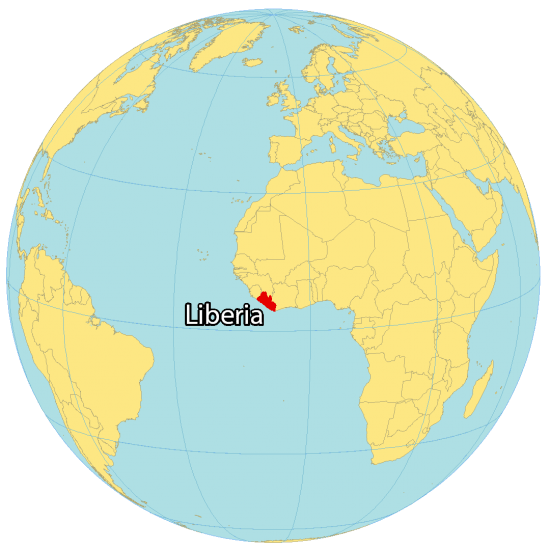
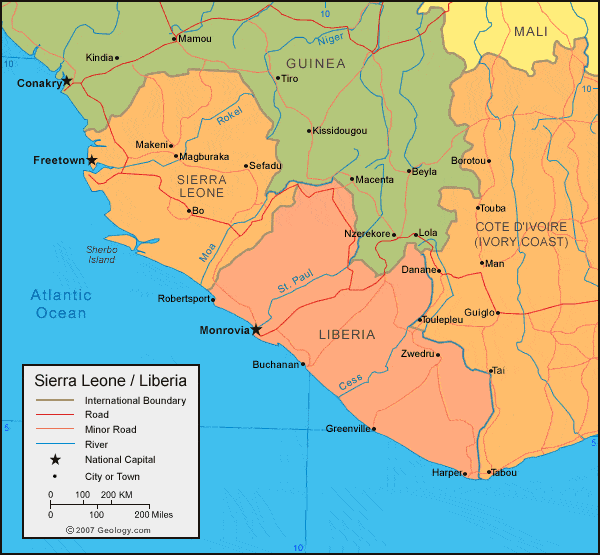
When you glance at a world map, does Liberia catch your eye, perhaps prompting a question like, Where exactly is Liberia on the world map, and whats its story? It’s a perfectly natural curiosity, considering this small West African nation possesses a truly remarkable and singular origin that sets it apart from nearly every other country on the continent. So, what precisely is Liberia? It’s the very first independent republic in Africa, established in 1847, a beacon of self-governance. Who, then, founded this extraordinary nation? Its founders were freed American slaves and free-born African Americans, who, with the support of the American Colonization Society, sought a return to their ancestral continent, seeking freedom and self-determination away from the racial injustices of the United States. Where can you find this pioneering nation? Liberia is strategically situated on the Atlantic coast of West Africa, nestled between Sierra Leone to the northwest, Guinea to the north, and Côte dIvoire to the east, making its location key for maritime trade and regional interactions. When did this ambitious project begin to take shape? The first organized landing of these repatriated Americans occurred in 1822, laying the groundwork for a sovereign state years later. Why did they choose this challenging path? They sought a homeland where they could live free, govern themselves, and demonstrate the capabilities of people of African descent, creating a compelling narrative of perseverance. How has this unique foundation shaped Liberia’s identity and its position on the global stage? Its unique genesis as a home for former slaves profoundly influences its political landscape, cultural identity, and diplomatic relations, making its story incredibly rich and vital to understanding global movements for freedom and equality.
Unveiling Liberia on the World Map: A Nations Genesis
Digging deeper into the narrative of Liberia on the world map reveals a tale of profound courage and the complex intertwining of two continents. What truly motivated these individuals to embark on such a perilous journey across the Atlantic? They harbored a powerful aspiration for liberty and self-governance, a dream denied to them in the United States, which compelled them to seek a new beginning. Who were these intrepid pioneers? They were not just individuals; they represented a diverse group of formerly enslaved people and free African Americans, carrying with them both the trauma of slavery and an indomitable spirit. When did this historic resettlement truly gain momentum, transforming from an idea into a tangible movement? The early 19th century saw increasing efforts by the American Colonization Society, leading to the establishment of settlements that would eventually coalesce into Liberia. Where exactly did these settlers disembark, marking the birth of a new nation? They landed primarily at what is now Cape Mesurado, near modern-day Monrovia, strategically choosing a coastal area that offered both resources and a connection to the sea. Why was the establishment of Liberia considered so significant, not just for its founders but for the broader African diaspora? It stood as a potent symbol, a living proof that people of African descent could govern themselves and build a flourishing society, challenging prevailing racist ideologies of the time. How did these early settlers navigate the immense challenges of establishing a new society in an unfamiliar land, dealing with indigenous populations, and forging an identity? They employed a mix of diplomacy, trade, and at times, conflict, as they built institutions, established laws, and slowly, painstakingly, crafted the framework of a modern state, a process fraught with both triumphs and tribulations that continue to define Liberia’s unique place in history.
Geographic Location of Liberia on the World Map: West Africas Gem
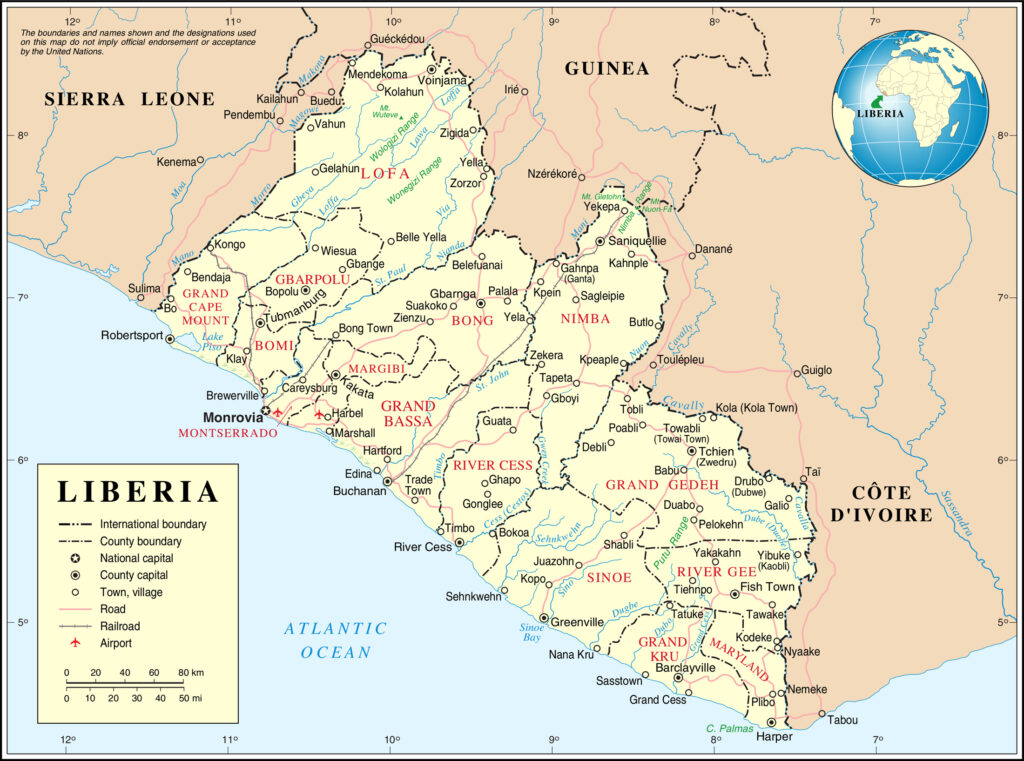
When we pinpoint Liberia on the world map, what do we discover about its physical boundaries and unique positioning? This vibrant nation boasts an enviable location along the Atlantic Ocean, giving it approximately 360 miles (579 kilometers) of picturesque coastline, a vital asset for trade and fishing. Where exactly does this West African gem sit? It is strategically bordered by Sierra Leone to its northwest, the Republic of Guinea to its north, and Côte dIvoire to its east, sharing land borders that foster regional interactions and, at times, pose complex geopolitical dynamics. What kind of terrain defines Liberia? Its landscape gradually rises from a flat, coastal plain characterized by lagoons, mangroves, and swamps, through rolling hills, to a plateau and low mountains in the northeast, reaching elevations of up to 4,500 feet (1,372 meters). How large is Liberia in terms of land area? It covers approximately 111,369 square kilometers (43,000 square miles), making it comparable in size to the state of Virginia in the United States, a significant but manageable territory for governance. Why is its coastal position so crucial for its economy and international relations? The deepwater ports along its coast, particularly the Free Port of Monrovia, serve as critical hubs for imports and exports, facilitating trade and connecting Liberia to global markets, making its geographical advantage unmistakable. Who are the people inhabiting this diverse land? The population is a rich tapestry of over 16 indigenous ethnic groups, including the Kpelle, Bassa, Gio, Kru, and Grebo, alongside the Americo-Liberians, descendants of the original settlers, all contributing to the nations unique cultural mosaic.
Historical Significance of Liberia on the World Map: A Beacon of Self-Determination
Examining the historical trajectory of Liberia on the world map reveals why its very existence was, and remains, a monumental achievement in the annals of global history. When did this nascent republic officially declare its independence, making a bold statement to the world? On July 26, 1847, Liberia formally announced its sovereignty, becoming Africas first independent republic and setting an unprecedented example for other nations on the continent still under colonial rule. Why was this declaration so profoundly significant, resonating far beyond its borders? It served as a powerful testament to the capabilities of people of African descent to govern themselves, directly challenging the racist narratives prevalent during the era of European colonialism and igniting hopes for freedom across the diaspora. What role did Liberia play during the fervent scramble for Africa by European powers in the late 19th and early 20th centuries? Uniquely, Liberia managed to retain its independence, though not without constant pressure and territorial disputes, demonstrating remarkable diplomatic acumen and resilience against immense imperial forces. How did its early leaders, predominantly Americo-Liberian, navigate the complexities of international recognition and internal governance? They meticulously crafted a constitution modeled on that of the United States, established a bicameral legislature, and worked to forge alliances, all while striving to integrate diverse indigenous populations, a continuous process of nation-building. Who were some of these pivotal figures, instrumental in safeguarding Liberia’s independence? Men like Joseph Jenkins Roberts, the nations first president, played a crucial role in securing international recognition and shaping the foundational principles of the new republic, embodying the aspirations of a self-determined people. What lasting impact has this early independence had on Liberias identity and its relations with other African nations? It has fostered a deep-seated pride and a sense of unique destiny, while also presenting challenges in reconciling its Americo-Liberian origins with its broader indigenous African heritage, all of which contribute to its distinctive profile on the world map.
Economic Landscape of Liberia on the World Map: Resources and Resilience
Shifting our focus to the economic landscape of Liberia on the world map, what natural resources does this nation possess that contribute to its potential prosperity? Liberia is remarkably rich in natural endowments, including substantial deposits of iron ore, diamonds, gold, and timber, alongside fertile land suitable for agriculture, making its economic future inherently promising. How does this abundance of resources translate into its contributions to the global economy? Historically, Liberia has been a significant exporter of rubber, with the Firestone Natural Rubber Company operating one of the worlds largest rubber plantations there, alongside exports of timber, iron ore, and other minerals, connecting it to international supply chains. Why is robust economic development so absolutely crucial for Liberia today, especially after decades of civil conflict? Sustainable economic growth is vital for poverty reduction, job creation, and rebuilding essential infrastructure, directly impacting the quality of life for its citizens and fostering long-term stability. Who are the primary beneficiaries of Liberia’s exports and resource exploitation? While international companies often play a large role, efforts are continually being made to ensure that the benefits are more equitably distributed among the Liberian population, supporting local communities and national development initiatives. What significant challenges, both historical and contemporary, hinder Liberia’s full economic potential? The nation has grappled with the devastating impacts of two civil wars, which decimated infrastructure and institutions, as well as issues of governance, corruption, and the global fluctuations in commodity prices, all of which require ongoing, dedicated effort to overcome. How is Liberia working to overcome these obstacles and foster a more resilient economy for its future? The government, with support from international partners, is focused on diversifying its economy beyond raw material exports, investing in education, healthcare, and improving governance to create a more attractive environment for both local and foreign investment, aiming for a self-sustaining and equitable economic future.
| Attribute | Detail |
|---|---|
| Capital City | Monrovia |
| Official Language | English |
| Population (approx.) | 5.5 million (2024 estimate) |
| Area | 111,369 sq km (43,000 sq mi) |
| Independence Date | July 26, 1847 |
| Currency | Liberian Dollar (LRD) |
| Major Exports | Rubber, Iron Ore, Diamonds, Gold, Timber, Coffee, Cocoa |
| Borders | Sierra Leone, Guinea, Côte dIvoire |
| Continent | Africa (West Africa) |
Cultural Tapestry of Liberia on the World Map: Diverse Voices, Shared Identity
Delving into the cultural tapestry of Liberia on the world map reveals a vibrant blend of traditions and influences, creating a truly unique national identity. What elements make Liberian culture so distinct and compelling? Its culture is a fascinating fusion, stemming from the indigenous traditions of its diverse ethnic groups—such as the Kpelle, Bassa, Gio, Kru, and Grebo—and the cultural heritage introduced by the Americo-Liberian settlers, including elements of American Southern culture and Protestant Christianity. Who are the various peoples that contribute to this rich mosaic, and how do their individual histories intertwine? With over 16 major indigenous ethnic groups, each with their own languages, customs, and artistic expressions, alongside the descendants of repatriated Americans, Liberia is a testament to the power of cultural coexistence and adaptation, albeit with historical tensions. How do these diverse communities maintain their unique traditions while also contributing to a broader national identity? Through storytelling, traditional music, dance, intricate craftsmanship, and distinct culinary practices, various communities preserve their ancestral ways, while English serves as the official language, providing a common communication bridge and fostering a collective sense of being Liberian. Why is the preservation of this cultural heritage so immensely important for Liberias future and its global standing? It not only provides a strong foundation for national pride and cohesion but also offers a valuable contribution to the worlds cultural diversity, showcasing resilience and innovation in the face of historical challenges. What role does education play in transmitting this rich cultural knowledge across generations? Educational institutions and community initiatives are increasingly focused on teaching Liberian history, languages, and arts, ensuring that younger generations understand and appreciate their multifaceted heritage, solidifying Liberia’s cultural footprint on the world map and celebrating its vibrant legacy.
Liberias Global Footprint on the World Map: Challenges and Hopes
Reflecting on Liberias place on the world map today, what pressing challenges does this resilient nation currently face as it strides towards a more prosperous future? Liberia continues its journey of post-conflict reconstruction and development, grappling with issues such as strengthening democratic institutions, combating corruption, improving healthcare and education systems, and ensuring sustainable economic growth, all vital for long-term stability. How is the international community involved in supporting Liberias ongoing efforts to rebuild and thrive? Numerous international organizations, non-governmental agencies, and bilateral partners provide crucial aid, technical assistance, and investment, working alongside the Liberian government to bolster peace, governance, and socio-economic development, demonstrating global solidarity. Why is understanding Liberia’s story and its current trajectory so vital for a truly informed global perspective? Recognizing Liberias unique historical context and its determination to overcome adversity offers profound lessons in resilience, self-determination, and the complexities of nation-building in a post-colonial, post-conflict world, making its narrative universally relevant. Who are the key players, both within Liberia and internationally, working towards securing a brighter future for the nation? From dedicated government officials and grassroots community leaders to international diplomats and development workers, a diverse array of individuals and organizations are committed to empowering Liberians and helping the nation achieve its full potential. What are the key indicators of progress and reasons for hope as Liberia navigates its path forward on the world map? Steady advancements in democratic processes, increased foreign investment in key sectors, and a vibrant civil society all point to a nation actively engaged in shaping its destiny, with its people continually working to build a more peaceful, equitable, and prosperous society for generations to come, truly embodying hope for tomorrow. Liberia’s journey is far from over, but its spirit of perseverance shines brightly, asserting its significant and enduring presence on the world stage.
Keywords: liberia on world map, where is liberia, liberia location, west africa, liberia history, african independence, monrovia, liberian culture, economic development liberia, peacebuilding africa, natural resources liberia, travel liberia, african diaspora, global map, countries west africa
Summary Question and Answer: What makes Liberia uniquely positioned on the world map? Liberia is uniquely positioned as Africas first independent republic, founded by freed American slaves, which gives it a distinct historical and cultural identity on the global stage.
Liberia, West Africas first independent republic, was founded by freed American slaves. Its unique history shapes its identity on the world map. Geographically, it borders Sierra Leone, Guinea, and Côte dIvoire. Its culture reflects its diverse ethnic groups and American-Liberian heritage. Liberia faces ongoing development challenges but holds rich natural resources.




Liberia Location On The World Map Liberia Location Map . Where Is Liberia Located Location Map Of Liberia Liberia Location Map . Liberia Location On World Map Liberia World Map 550x550 . Liberia Maps Facts World Atlas Lr 02 . Liberia On A World Map Map Physical Location Map Of Liberia




Liberia On A World Map A Nations Story Liberia Regions . Liberia Location On The Africa Map Liberia Location On The Africa Map . Liberia Map And Satellite Image Liberia Map . Premium Vector Liberia On World Globe With Flag And Regional Map Of Liberia World Globe With Flag Regional Map Liberia Vector 292608 611 . Liberia Map Detailed Maps Of Republic Of Liberia Map Of Liberia


Liberia Map Liberia Map Of Liberia World . Liberia On The World Map Stock Image Image Of Technology 304481673 Liberia World Map Shot Light Depth Field Focusing Country 304481673 . Liberia On World Map Geo Political Map Stock Photo 2598802613 Stock Photo Liberia On The World Map Geo Political Map 2598802613 . Liberia Detailed Map And Flag Liberia On World Map Stock Vector 1000 F 422963839 . Liberia Highlighted On A White Simplified 3D World Map Digital 3D Liberia Highlighted On A White Simplified 3d World Map Digital 3d Render 2PTT6D3


Premium Vector Zoom On Liberia Map And Flag World Map Zoom Liberia Map Flag World Map 292608 8764 . Liberias Place World 3d Map Stock Vector Royalty Free 1737555389 Stock Vector Liberia S Place In The World D Map 1737555389 . Liberia Trade Agriculture Mining Britannica World Data Locator Map Liberia . Liberia Map Detailed Insights On Geography Population And Key Facts 1000 F 860580781 . By Kumasi Palmer SRDC South Carolina Facilitator Liberia Map 1 From Map Library 1024x761


Liberia On A Map Of The World Display Poster Teacher Made T G 1723023636 Liberia On A Map Of The World Display Poster Ver 4 . Women Britannica Liberia Map Boundaries Cities Locator . Blue World Map With Magnifying On Liberia 11494700 Vector Art At Vecteezy Blue World Map With Magnifying On Liberia Vector . Premium Vector The Projection Of The World Map With Projection World Map With Liberia Its Center Country West Africa 1122597 69 . Liberia Map Image Republic Of Liberia Map Vector 3025171


Close Up To A Liberia Political Map With Country Frontiers And Most Close Up To A Liberia Political Map With Country Frontiers And Most Importants Cities 2XGCHWG . Map Of Monrovia Liberia West Africa At Robert Towner Blog Lrcolor . Premium Vector Liberia On World Map Vector Liberia World Map Vector 601298 10218 . 8 300 Liberia Stock Photos Pictures Royalty Free Images IStock Liberia Political Map . Liberia Costa Rica October Liberia Map 1oct2019


Liberia Outline Map Liberia Outline Map With State Boundaries Liberia Blank Outline Map . Liberia Highlighted On A World Map Stock Image Image Of Spot Zoom Liberia Highlighted World Map 358783763 . Liberia Map Major Cities Large Detailed Political And Map Of Liberia With Relief Roads Railroads And Major Cities 1996 . Monrovia City Stock Vector Images Alamy Abstract Rounded World Map With Pinned Detailed Liberia Map Vector 2CC4WRW . Where Is Liberia Location Of Liberia Liberia Political Map